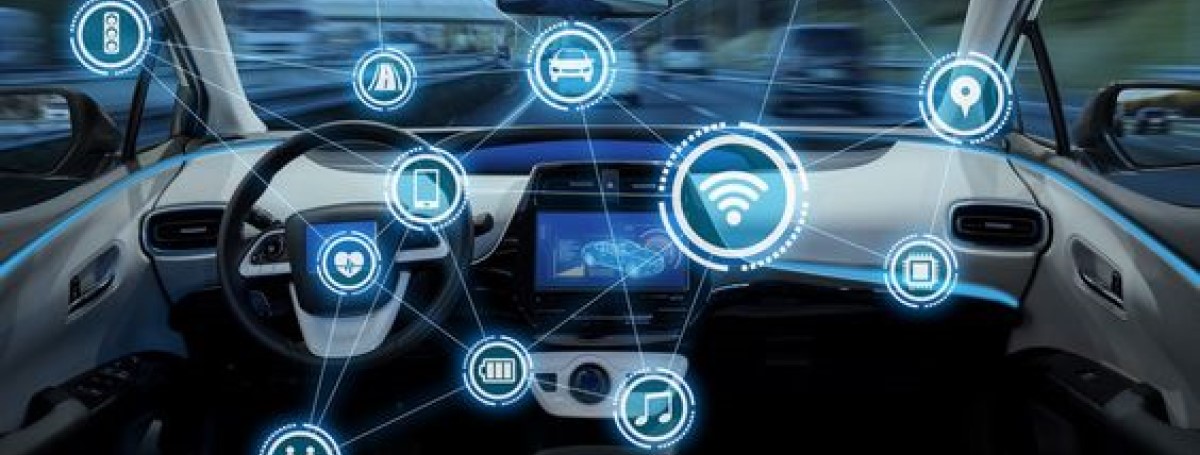
AI and smart mobility will play a key role
The Smarter Italy programme will improve the air quality index in cities by applying artificial intelligence to mobility. 11 urban centres will become laboratories for digital transformation and transport innovation.

What is Smart Mobility?
Smart Mobility is defined as both a process and a paradigm. It is a process because it involves the reorganization of individual and collective mobility needs, and the application of new infrastructures and solutions. It is a paradigm because it offers the possibility of implementing the potential of the Internet of Things (IOT) in the mobility sector.
By means of smart mobility, travel becomes more flexible and better integrated, reducing traffic and pollution, minimizing wastage of time and energy, optimizing flow and equipment. Smart mobility improves on the classic concept of transporting people and goods.
Future transport in a Smarter Italy
The Smarter Italy programme – promoted by the Ministry for Economic Development, the Ministry for Universities and Research, and the Ministry for Technological Innovation and Digitization – aims to improve the lives of communities and citizens by experimenting technological solutions in a number of areas, including mobility, the environment, personal wellbeing and cultural heritage. Smart Cities, Smart Mobility and Logistics will be the first area of intervention.
Italy’s smart cities
The first operation of the Smarter Italy programme involves the definition of one or more innovative tender competitions for the development of solutions that improve mobility and logistics in Italian cities. Smarter Italy will involve 11 urban centres (the Smart Cities, namely L’Aquila, Bari, Cagliari, Catania, Genoa, Matera, Modena, Milan, Prato, Rome and Turin) and 12 smaller settlements (the Towns of the future).
Programme phases
These cities have expressed their needs for innovation in terms of traffic, pollution, air quality index, quality of life in city centres, and the functionality of industrial districts. A public consultation was launched with market players, comprising companies, start-ups, universities and research centres. The programme is open to participation from administrations and public organizations wishing to propose areas in which innovation is necessary, co-financing the programme or suggesting operational fields in which experimentation can be performed.
Solutions will be tested in the geographical areas of the cities listed above. These locations will thus constitute true advanced laboratories of intelligent mobility and AI applied to both people and merchandise.
By Anna Zabeo